How to Navigate Mail-In Voting on a Democratic Campaign: Your Go-To Guide
13 min

Published: April 16th, 2026
Table of contents
Why Mail-In Voting Is a Frontline Issue for Democratic Campaigns Right Now
Understanding the Threat Landscape
Building a Vote-By-Mail Program From the Ground Up
Voter Education: The Campaign's Most Important Mail-In Voting Job
Ballot Tracking and Curing Programs: Leave No Vote Behind
How NDTC Prepares Democratic Campaigns to Protect and Maximize Mail-In Voting
Mail-in voting has always been a cornerstone of Democratic turnout strategy. For millions of voters — seniors, people with disabilities, rural residents, military families, college students, shift workers who can't get to the polls — casting a ballot by mail isn't a convenience. It's how they vote. In 2026, and right now, the GOP escalated targeting and attempting to dismantle this method of voting to keep us from casting ballots.
That’s why Democratic campaigns cannot treat mail-in voting as a passive process — as something that just happens when you put a ballot in the mail. In our current environment, protecting and maximizing vote-by-mail requires active, organized campaign effort at every stage: from voter education and ballot request programs to tracking, curing, and counting. This guide walks Democratic candidates and campaign staff through exactly how to build that program — and how NDTC can help you do it well.
Why Mail-In Voting Is a Frontline Issue for Democratic Campaigns
The threats to mail-in voting are no longer theoretical. They are active, layered, and accelerating.
On March 31, 2026, President Trump signed an executive order directing the creation of a national voter list and imposing new restrictions on mail-in voting — the latest in a series of federal actions targeting voters’ rights. A previous executive order on elections sought to require mailed ballots to be received by Election Day rather than postmarked by it, and to add proof-of-citizenship requirements to the federal voter registration form. Much of that earlier order has been blocked in court, but legal challenges take time — and time is exactly what campaigns don't have to spare.
The U.S. Postal Service updated its regulations on December 24, 2025, redefining a postmark as the date mail is processed rather than the date it is collected — a change with direct implications for mail ballot deadlines. Combined with a separate operational restructuring that reduces daily transportation trips to many delivery units, these changes mean that ballots and campaign mail are now taking longer to move through the system in ways that are difficult to predict and track. A coalition of House Democrats warned in early 2026 that these postal changes could disenfranchise voters in rural and remote communities who rely most heavily on mail service.
Several GOP-led states have already moved to eliminate or sharply curtail the grace periods that previously allowed ballots postmarked by Election Day to be counted if they arrived shortly after. A U.S. Supreme Court case that could end ballot grace periods nationwide is expected to produce a decision in 2026 — one that could affect voters in 16 states and D.C.
The bottom line for Democratic campaigns is that mail-in voting is secure — a 2025 Brookings Institution report found that mail voting fraud occurred in only 0.000043% of total mail ballots cast — but the laws governing it are anything but. Campaigns that don't actively adapt will leave votes on the table. Campaigns that do will minimize Republicans’ attempts to undermine voters.
Understanding the Landscape
Before you can build a mail-in voting program that holds up under current conditions, your campaign team needs a clear-eyed understanding of what you're navigating. Here are the five key threat categories every Democratic campaign should be tracking:
Postmark and receipt deadline changes. The shift in how the USPS defines a postmark — from the date mail is collected to the date it’s processed — means a ballot dropped in a mailbox on Election Day may not receive a same-day postmark. In states where the postmark deadline is Election Day, this creates real risk of ballots being rejected even when voters did everything right. That means campaigns need to know their state's specific receipt and postmark rules and communicate updated guidance to voters well in advance.
Grace period elimination. If your state currently counts ballots that arrive after Election Day as long as they are postmarked on time, that rule may be changing. Monitor your state legislature and any pending legislation closely. If a grace period is eliminated or shortened before your election, your ballot education timeline and your urgency messaging both need to adjust accordingly.
Postal delivery slowdowns. Reduced transportation frequency in the USPS's restructured network means mail is moving more slowly and less predictably in many parts of the country — particularly rural areas. Campaigns should plan for longer delivery windows by encouraging voters to mail ballots significantly earlier than they may have in previous cycles.
Voter confusion and suppression through misinformation. False claims about the security of mail-in voting have created genuine confusion among some voters about whether their ballot will count. Campaigns have a responsibility to counter that misinformation directly and consistently — with accurate, reassuring, and actionable information about how mail-in voting actually works.
Executive and administrative actions. Federal executive orders targeting mail-in voting may be blocked by courts, but the uncertainty they create is a campaign challenge in itself. Voters who hear that mail-in voting is being restricted may disengage from the process entirely. Your campaign's job is to keep your supporters informed, calm, and participating — regardless of what is happening in the courts or in Washington.
Building a Vote-By-Mail Program From the Ground Up
A serious mail-in voting program is not an afterthought. It should be a core pillar of your campaign's voter contact and turnout strategy, built deliberately and executed with the same discipline as your field canvassing program.
Start with your voter file. Your first step is identifying which voters in your target universe have voted by mail in previous elections. These are the people most likely to request and return a mail ballot again if your campaign makes it easy and reminds them to do so. Flag this universe early and build a dedicated outreach plan around them.
Run an active ballot request program. In states where voters must request a mail ballot, your campaign should proactively contact every target voter who is eligible to vote by mail and walk them through how to request one. This means phone calls, text messages, door knocks, and direct mail — all driving them to get ballot requests in early. Don't assume voters will do this on their own, especially in a cycle where postal delays and deadline changes have added new complications.
Counsel voters on how to return their ballots. Given current postal conditions, voters should be advised to return their ballot well before the deadline. Ideally, by dropping it at an official drop box or returning it in person to their local election office rather than relying on mail delivery. Specific things to communicate include how to properly sign and seal the envelope, whether a witness or notary signature is required in your state, and the exact deadline — and preferred method — for returning the ballot. Your campaign should know exactly where drop boxes and in-person return locations are in your district and make that information easy for voters to find.
Integrate vote-by-mail into your entire voter contact program. Every canvasser, phone banker, and text banker should know your campaign's mail-in voting guidance and be prepared to share it. Mail-in voting education is not a separate program — it should be part of voter conversations from the moment ballots become available.
Voter Education: The Campaign's Most Important Mail-In Voting Job
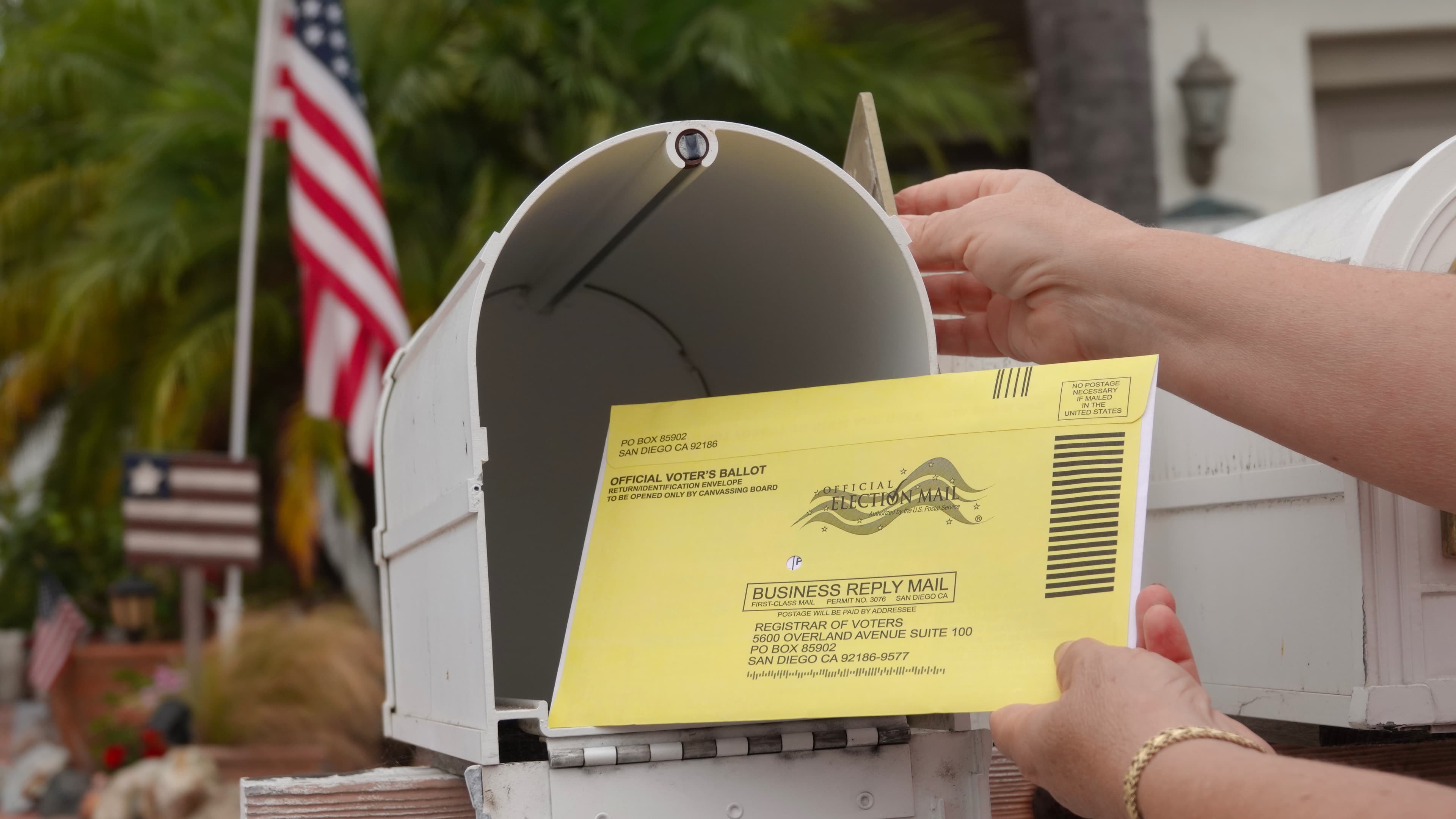
In the current environment, voter education around mail-in voting is mission-critical. Confused voters make mistakes on their ballots. Misinformed voters don't request ballots at all. Voters who hear that mail-in voting is under threat may simply disengage.
Repetition matters. Research consistently shows that voters need to hear important information multiple times, across multiple channels, before it registers and drives action. Say this directly: Mail-in voting is secure. Fraud is increasingly rare. Build mail-in voting education into your email program, your social media content, your direct mail pieces, your canvassing scripts, and your phone banking calls. Make it part of the campaign's regular rhythm rather than a one-time push. Your voters deserve confidence that their ballot will count — and your campaign can give them that confidence.
Ballot Tracking and Curing Programs: Leave No Vote Behind
Requesting and returning a mail ballot is not the end of the process. Ballots can be rejected for technical reasons — a missing signature, a mismatched signature, an improperly sealed envelope — that have nothing to do with fraud and everything to do with paperwork. Democratic campaigns that build robust tracking and curing programs can recover votes that would otherwise be lost. Here’s what you need to know:
Ballot tracking. Most states provide some mechanism for voters to track the status of their mail ballot — whether it has been received, whether it has been processed, and whether it has been accepted or flagged for a problem. Your campaign should know how ballot tracking works in your state and actively promote it to your mail-in voting universe. A voter who knows their ballot status is a voter who can take action if something goes wrong.
Ballot curing. When a mail ballot is flagged for a correctable error, many states allow voters to "cure" the ballot — to fix the problem before it's rejected. Cure windows are short and the process varies by jurisdiction. In close races, ballot curing can be decisive: in a 2025 Boca Raton mayoral recount, the Florida Democratic Party's ballot cure effort fixed five ballots — the exact margin of the Democratic candidate's victory. Your campaign should know your state's cure process, have a plan to notify affected voters quickly, and have staff or volunteers ready to help them resolve issues before the cure deadline expires.
Post-election reconciliation. After the election, review rejected ballot data. Understanding why ballots were rejected in your district helps your campaign — and the party — improve voter education for future cycles and identify patterns that may warrant legal or administrative challenge.
How NDTC Prepares Democratic Campaigns to Protect and Maximize Mail-In Voting
Mail-in voting is one of the most rapidly changing areas of campaign practice — and Democratic campaigns that aren't trained and prepared for those changes will be caught flat-footed in a cycle that won't wait for anyone to catch up.
NDTC's training resources are built to keep Democratic candidates and campaign staff ahead of the curve. We have an online course entirely dedicated to teaching campaigns how to build robust vote-by-mail programs, and you can enroll for free now.
With on-demand resources covering voter contact strategy, field program execution, and the evolving legal and operational landscape around voting rights, NDTC gives campaigns the knowledge they need to build vote-by-mail programs that are proactive, resilient, and effective — regardless of what changes between now and Election Day.
Whether you're a first-time candidate building a local campaign operation or an experienced campaign manager running a competitive statehouse or congressional race, the principles that protect and maximize mail-in voting are the same: start early, educate relentlessly, track every ballot, and leave no vote behind.
Sign up for NDTC's free trainings today and make sure your campaign is ready.


