How to Prepare Your Candidate to Debate (or Take the Forum Stage)
10 min
Published: September 24th, 2026
Table of contents
What Is a Candidate Forum, and How Is It Different From a Debate?
Why Debate Prep Deserves Real Time on Your Campaign Calendar
Building Your Message Before You Build Your Answers
Mock Debates: The Practice That Actually Prepares You
The Day Of: How to Walk In Calm and Ready
How NDTC Helps Democratic Candidates Own the Stage
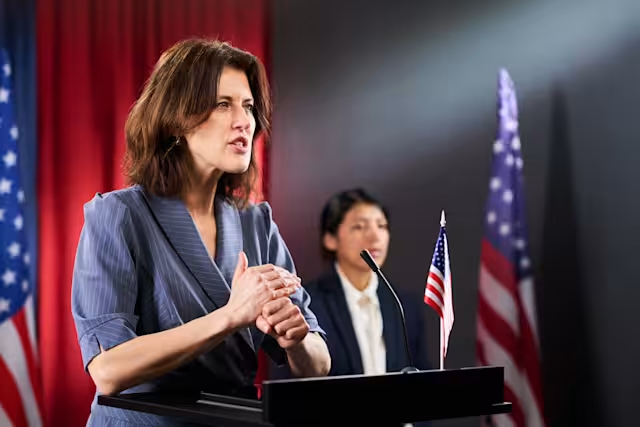
For a lot of first-time candidates, the moment they dread most isn't Election Day. It's the debate or forum before it: the spotlighted podium, tough moderator, cross-armed audience scrutinizing you, and the fear of freezing up in front of people who are deciding whether to vote for you.
That fear is normal, and it can be addressed. Some of the best communicators in Democratic politics were once nervous first-timers who worked at overcoming their fears until they were no longer blocks. This guide walks you through what to expect on the debate or forum stage, how to prepare your candidate (or yourself) to perform well under pressure, and how NDTC's training resources can help you get there.
What Is a Candidate Forum, and How Is It Different From a Debate?
Candidates hear both terms thrown around, often as if they're interchangeable. But the two are distinctly different, and knowing the difference changes how you prepare.
A candidate forum is typically hosted by a civic group, a chamber of commerce, a neighborhood association, or an organization like the League of Women Voters. Every candidate in a race is usually invited, questions come from the moderator or the audience, and each candidate answers in turn. There's rarely direct back-and-forth between opponents. Forums tend to feel more like a community conversation than a confrontation.
A candidate debate (the one you’re probably imagining, podium and all) is more structured and more adversarial by design. Formats vary, but debates usually involve fewer candidates (often just the frontrunners), a moderator who presses for specifics, and built-in opportunities for candidates to respond directly to each other. Debates are where stark contrasts get drawn, and where a sharp answer or a bad stumble is more likely to make the news.
So the formats are different, but they each matter to learn. The good news is the preparation for each overlap more than they differ.
Why Debate Prep Deserves Real Time on Your Campaign Calendar
Campaigns are endlessly busy, and it's tempting to treat debate prep as something you'll figure out the week of. Our advice: don’t. A strong debate or forum performance can shift undecided voters, generate earned media, and give your volunteers a clip to share. A bad showing can undo months of door-knocking in a single soundbite.
Good debate prep goes beyond avoiding mistakes – it also focuses on the opportunity. Voters who show up to a forum are paying close attention, often more than they will at any other point in the race. That's a room full of people actively deciding who deserves their vote. Prepared candidates make that decision much easier, especially when they’re up against an unprepared one.
Whether you're getting ready for a city council forum, a state rep debate, or something further up the ballot, block real time on the calendar for prep, not just for the week before but in the weeks leading up to it.
Building Your Message Before You Build Your Answers
The candidates who struggle most on a debate stage usually aren't struggling with public speaking. They're struggling because they never nailed down their message, and it shows the moment a hard question comes their way. Here are four tactical steps to help you get there:
Know your three issues cold. Every candidate should be able to name the two or three issues that define their candidacy without hesitating. These are the issues you return to no matter what you're asked, because they're the reason you're running and the reason voters should choose you. If you haven't gotten clear on your "why" yet, that work should come first.
Anticipate the hard questions. Sit down with your campaign manager or a trusted advisor and write out every uncomfortable question a moderator or opponent could ask. Your voting record, your opponent's attacks, the controversy you'd rather not discuss. Write an honest, direct answer to each one now, while you have time to think it through, instead of live on stage.
Learn to bridge. A bridge is a short phrase that moves a question you don't love toward the message you do: "That's a fair question, and here's what matters most to families in this district." It's how experienced communicators stay disciplined without being evasive.
Prepare a closing statement early. Your closing is often the last thing voters hear before they walk out of the room, and it's one of the few moments in a debate you fully control. Draft it well in advance, memorize the structure (not word for word), and practice delivering it with real energy.
Mock Debates: The Practice That Actually Prepares You
Reading your talking points out loud to yourself in the car is not debate prep. The candidates who perform best on stage have practiced under conditions that actually resemble the real thing, so here are four ways to do it:
Run a full mock debate. Recruit someone from your kitchen cabinet to play moderator and, if possible, someone else to play your opponent, using your opponent's actual public statements where you can find them. Most forums and debates give candidates 60 to 90 seconds per response, and staying inside that window under pressure takes practice, so practice timing every answer.
Record it and watch it back. This is the step most candidates skip because it's uncomfortable, but it's also what improves performance the fastest. Watch for filler words, defensive body language, and answers that ramble past the point you were trying to make.
Practice with real interruptions and follow-ups. Ask a tough follow-up question the moment your candidate finishes an answer. Real debates rarely let you finish a thought and move on cleanly, so your prep shouldn't either.
Get feedback from people who will tell you the truth. Not just your biggest supporters and “yes” men. Ask someone who you trust to observe a mock round and judge your performance objectively to tell you honestly what landed and what didn't.
The Day Of: How to Walk In Calm and Ready
Remember that nerves on the day of a debate are a sign that you care, not necessarily a sign that you’re unprepared. A Psychology Today overview of public speaking anxiety notes that it's one of the most common fears people report, and that preparation is consistently the most effective way to reduce it. The goal on debate day isn't to eliminate nerves, but to keep them from running the show. Here are three reminders for managing the anxiety:
Stop cramming the night before. New information the night before a debate rarely helps and often just adds stress. Review your core message, get real sleep, and trust the preparation you've already put in.
Arrive early and get comfortable in the room. Walk the stage if you can, find the podium, figure out where the moderator and your opponent will be standing. A familiar room feels far less intimidating than an unfamiliar one, also it’s one less thing for your brain to have to process – the better to focus on your debate.
Have a physical routine that settles you. Slow, deliberate breathing before you walk out, a glass of water, a few minutes away from your phone. Find whatever helps you feel steady, and do it every time so your body learns to associate it with confidence-building focus rather than panic.
Remember that connection beats perfection. Voters are listening for whether you understand their lives and whether they trust you to fight for them more than they’re looking for a flawless performance. A genuine, slightly imperfect answer almost always lands better than a polished one that feels phony.
How NDTC Helps Democratic Candidates Own the Stage
Debate and forum prep is one of the most requested skills we hear about from first-time candidates, and we have a treasure trove of free resources for candidates in debate prep mode.
Through free online trainings and on-demand resources, NDTC walks Democratic candidates through message development, mock debate practice, and the mental preparation it takes to perform well under pressure. Whether you're preparing for your first school board forum or a high-stakes congressional debate, the fundamentals are the same, and they're learnable.
You don't have to be born a natural on stage to win the room. You do have to be prepared, and that's something we can help with.
Sign up for NDTC's free trainings today and start building the confidence to own your next debate stage.


