How to Run for Office
8 min
Why Run for Office?
National headlines dominate the conversation, but the decisions that most directly affect people's daily lives happen closer to home. Local city councils set zoning rules that shape neighborhoods. State legislatures write the laws that govern healthcare, education, and workers' rights. School boards determine what happens in classrooms every single day. When Democrats don't run for these seats, those decisions get made without them. Running for local or state office is one of the most direct ways to create change in your community.
Where Do You Start?
One of the silent barriers to running for office is simply not knowing where to begin. The good news is that all the skills you need to run a winning campaign are teachable. You don't need a political science degree or a Rolodex full of donors. You need a plan, a message, and the willingness to put in the work. Here's how to get started — all for free with NDTC.
Step-by-Step: How to Run for Office
Step 1: Choose Your Race Start by identifying the office that matches your interests, your community's needs, and your capacity as a first-time candidate. School board, city council, county commissioner, and state legislature seats are all high-impact races where Democrats can and do win — including in red and purple districts. Think about where your voice would make the biggest difference, and start there.
Learn more: Lesser-Known Local Offices You Can Run For Right Now
Step 2: Know Your District Before you announce, do your homework. Study past election results in your district and talk to neighbors, community members, and local party leaders. Understanding your district's issues and voter landscape will shape every decision you make during your campaign.
Learn more: How to Get Involved in Local Politics for Democrats
Step 3: Get on the Ballot Every race has its own filing requirements, deadlines, and rules — and missing them can disqualify you before you've started. You'll typically need to register as a candidate, obtain a tax ID for your campaign, open a campaign bank account, and meet any signature or petition requirements.
Learn more: How to Get on the Ballot
Step 4: Build Your Campaign Team No candidate wins alone. At minimum, you'll need a campaign manager, a treasurer, and a core group of committed volunteers. Early on, a "kitchen cabinet" — trusted advisors who will give you honest feedback — is just as important as paid staff. Identify people who complement your skills and share your commitment to winning.
Learn more: How to Put Together a Campaign Team
Step 5: Raise Money for Your Campaign Money isn't everything, but it funds everything else — mailers, digital ads, staff, and voter outreach. Learn the basics of campaign finance compliance early so you stay on the right side of the rules. The most effective fundraising tool for most local and state candidates is direct outreach — phone calls, emails, and one-on-one asks.
Learn more: Democrat's Guide to Grassroots Fundraising
Step 6: Develop Your Message Voters need to know who you are, why you're running, and what you'll do for them. A strong campaign message is specific, personal, and rooted in your community's real concerns. It connects your story to the issues voters care about most.
Learn more: Getting Through With Messaging
Step 7: Build Your Field Plan and Get Out the Vote Campaigns are won through direct voter contact. Canvassing, phone banking, and peer-to-peer texting are your highest-leverage tools for persuading undecided voters and turning out supporters. Build your volunteer base early, train them well, and have a clear GOTV plan in place well before Election Day.
Learn more: The Fundamentals of Field Tactics
Common Questions
Do I need experience in politics to run? No. Many successful candidates — including NDTC alumni who have won seats across the country — had no prior political experience before they ran. What matters is a genuine connection to your community, a willingness to learn the fundamentals of campaigning, and the commitment to show up every day. That's exactly what NDTC's free training is designed to build.
How much does it cost to run? It depends heavily on the office and the district. A school board race in a small community might require a few thousand dollars; a competitive state legislative race could require significantly more. The key is to set a realistic budget and start fundraising early — both things NDTC can train you to do for free.
What office should I run for first? For most first-time candidates, a local or municipal race is the right starting point. These races are winnable with strong grassroots organizing, they build the skills and name recognition that serve candidates in future races, and they directly impact the people and places you know best.
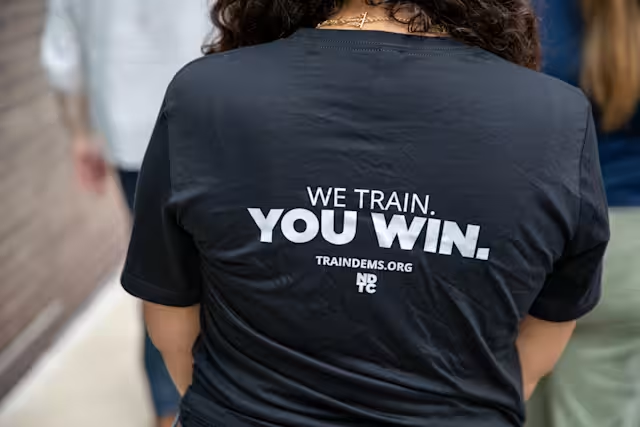
How does NDTC help candidates? NDTC offers free online training — including on-demand courses, virtual live sessions, guided learning plans, and downloadable resources — covering every stage of your campaign, from filing paperwork to Election Day operations. More than 128,000 Democrats have trained with NDTC to defend and flip seats all over the country. All of it is free, and all of it is accessible anywhere, anytime.
Not Sure Where to Start?
Take our free 10-Day Challenge. If you're still figuring out whether running is right for you, start here. The 10-Day Challenge walks you through the first decisions every candidate has to make — all in one place, all for free.
How NDTC Can Help
NDTC is the largest Democratic campaign training organization in the country, and everything we offer is free. Our online academy includes 100+ courses covering the full range of campaign skills — from digital fundraising and field canvassing to crafting your personal story and managing volunteers. Virtual live trainings let you learn directly from experienced trainers and ask questions in real time. Whether you're deciding whether to run or deep into a competitive race, we have the resources to help you win.
Success Stories
“There is minimal chance I would have won in the primary without the NDTC training. My opponent had the experience and knowledge of campaigning. I had no campaign experience, no fundraising experience, and no political experience at all.” — Sam Charbonneau, former candidate for Indiana House of Representatives District 72
"Having this training was invaluable in understanding the basics of how a campaign worked and what the needs were... For someone who has not previously worked on a campaign, this is essential. I am so grateful for having this resource." — Terri McKinnon, former candidate for Michigan House of Representatives District 65
Ready to Run? The candidates who drive the next blue wave are training with NDTC right now. Start building your campaign skills today — for free.
